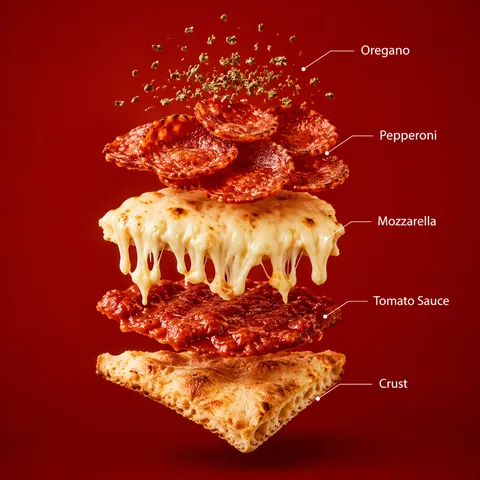
Prompt: 16:9, do it for a much lesser known texan food to die for Do this for [Food / Dish / Meal / Snack / Beverage / Ingredient-Based Culinary Item]: 1. The Semantic Inference Engine (The Culinary Anatomy Board): Input A is a food item, prepared dish, snack, beverage, or edible composition. Analyze Input A and infer 6 Structural Components: The Central Hero Form: determine the most recognizable full assembled form of Input A as the centerpiece. The Core Ingredients: identify the 4–8 major components that define Input A’s structure, flavor, and identity. The Functional Roles: for each component, infer its culinary role — base, filling, binder, garnish, sauce, seasoning, texture layer, aromatic element, structural shell, etc. The Visual Breakdown: determine how each component should be separately represented — whole ingredient, chopped form, bowl of prepared component, sauce sample, leaf, grain cluster, powder, slice, or texture sample. The Analytical Metrics: infer 1–2 simple explainer charts or diagrams per component, such as flavor profile, texture intensity, heat level, crunch factor, acidity balance, sweetness, richness, freshness, or aroma spectrum. The Scientific Overlay: generate plausible educational-style labels such as simplified chemistry notation, structural classification, ingredient family, preparation type, or culinary property markers — visually credible, not hardcoded. 2. The Immutable Container (The Clean Educational Poster): Goal: a modern food anatomy infographic board. white framed poster or mounted display board ultra-clean background central assembled food item in the middle surrounding ingredient callout boxes distributed symmetrically around the hero object thin connecting lines from each ingredient panel to the relevant part of the central food 3. The Poster Construction (Centerpiece + Callout System): Build the poster as a structured educational layout: a large bold title at the top generated from Input A in the format of an anatomy / breakdown / composition study one central high-quality rendered image of Input A 4–8 surrounding ingredient boxes, each containing: a clean visual of one inferred component the component name one short scientific / pseudo-technical notation line one or two small chart graphics or profile diagrams color-code the component boxes subtly according to ingredient category if appropriate 4. No Hardcoding Constraint: Do not assume taco ingredients, sandwich ingredients, or any fixed food structure. Instead: if Input A is layered, infer layers if Input A is wrapped, infer shell + filling system if Input A is plated, infer sauce + protein + garnish + base if Input A is a beverage, infer liquid phases, toppings, foam, ice, aromatics, or inclusions if Input A is a dessert, infer crust, filling, glaze, texture contrast, decoration, and flavor accents if Input A is simple, infer fewer but more essential components The infographic must be generated from the variable food item itself. 5. Educational Graphic Style: The board should feel like a hybrid of: culinary science poster museum food explainer modern menu lab graphic clean commercial infographic Use: bold sans-serif typography neat line connectors minimalist charts clean color accents organized spacing and strong readability 6. Visual Syntax & Atmosphere: Camera: straight-on poster view, orthographic or near-orthographic Lighting: bright, soft, shadow-controlled studio lighting Background: clean tiled wall, neutral interior, or pure white presentation space Detail: premium food-render realism in the central item and ingredient samples Aesthetic: educational, appetizing, precise, modern, and visually balanced 7. Output Constraint: The final image should work for any Input A: tacos ramen croissants burgers sushi salad bowls dumplings bubble tea pizza pastries curries sandwiches All labels, component choices, and charts must be inferred from the variable dish, with no hardcoded ingredient set. Output: ONE image, square aspect ratio, clean framed educational food for Input A, featuring a central hero dish, AI-inferred ingredient callout panels, minimalist data charts, labeled connectors, and no hardcoded subject details.
1:1 干净教育美食解剖海报:尼日利亚焦耳夫饭。中央是红米饭配烤鸡与炸芭蕉;周围食材标注框与细连接线;顶栏标题 JOLLOF RICE ANATOMY。无品牌、无人物、无手。
1:1 乾淨教育美食解剖海報:奈及利亞焦耳夫飯。中央是紅米飯配烤雞與炸芭蕉;周圍食材標註框與細連線線;頂欄標題 JOLLOF RICE ANATOMY。無品牌、無人物、無手。
16:9، اصنع هذا لطعام تكساسي أقل شهرةً بكثير يستحق الموت من أجله. افعل هذا من أجل [الطعام / الطبق / الوجبة / الوجبة الخفيفة / المشروب / العنصر الطهوي القائم على المكونات]: 1. محرك الاستدلال الدلالي (لوحة التشريح الطهوي): المدخل أ هو عنصر غذائي، طبق مُعد، وجبة خفيفة، مشروب، أو تركيب صالح للأكل. حلل المدخل أ واستنتج 6 مكونات هيكلية: الشكل البطل المركزي: حدد الشكل الكامل الأكثر تميزًا للمدخل أ كقطعة مركزية. المكونات الأساسية: حدد 4–8 مكونات رئيسية تحدد بنية المدخل أ ونكهته وهويته. الأدوار الوظيفية: لكل مكون، استنتج دوره الطهوي — قاعدة، حشوة، رابط، زينة، صلصة، توابل، طبقة قوام، عنصر عطري، قشرة هيكلية، إلخ. التفكيك البصري: حدد كيف ينبغي تمثيل كل مكون بشكل منفصل — مكون كامل، شكل مفروم، وعاء من مكون مُعد، عينة صلصة، ورقة، عنقود حبوب، مسحوق، شريحة، أو عينة قوام. المقاييس التحليلية: استنتج 1–2 مخطط شرح أو رسم تخطيطي بسيط لكل مكون، مثل ملف النكهة، شدة القوام، مستوى الحرارة، القرمشة
16:9, fallo per un cibo texano molto meno conosciuto per cui morire. Fai questo per [Cibo / Piatto / Pasto / Spuntino / Bevanda / Ingrediente di Base Culinario]: 1. Il Motore di Inferenza Semantica (Il Consiglio di Anatomia Culinaria): L'Input A è un alimento, piatto preparato, spuntino, bevanda o composizione commestibile. Analizza l'Input A e inferisci 6 Componenti Strutturali: La Forma Centrale Eroica: determina la forma assemblata completa più riconoscibile dell'Input A come elemento centrale. Gli Ingredienti Principali: identifica i 4–8 componenti principali che definiscono la struttura, il sapore e l'identità dell'Input A. I Ruoli Funzionali: per ogni componente, inferisci il suo ruolo culinario — base, ripieno, legante, guarnizione, salsa, condimento, strato di texture, elemento aromatico, guscio strutturale, ecc. La Scomposizione Visiva: determina come ogni componente dovrebbe essere rappresentato separatamente — ingrediente intero, forma tritata, ciotola di componente preparato, campione di salsa, foglia, grappolo di cereali, polvere, fetta o campione di texture. Le Metriche Analitiche: inferisci 1–2 semplici grafici o diagrammi esplicativi per componente, come profilo aromatico, intensità della texture, livello di piccantezza, croccantezza
16:9, mach es für ein viel weniger bekanntes texanisches Essen, für das man sterben würde. Mach das für [Essen / Gericht / Mahlzeit / Snack / Getränk / Zutatbasiertes Kulinarisches Element]: 1. Die Semantische Inferenz-Engine (Das Kulinarische Anatomie-Gremium): Eingabe A ist ein Lebensmittel, ein zubereitetes Gericht, ein Snack, ein Getränk oder eine essbare Zusammensetzung. Analysiere Eingabe A und leite 6 Strukturelle Komponenten ab: Die Zentrale Heldenform: Bestimme die erkennbarste vollständig zusammengesetzte Form von Eingabe A als Herzstück. Die Kernzutaten: Identifiziere die 4–8 Hauptkomponenten, die Struktur, Geschmack und Identität von Eingabe A definieren. Die Funktionalen Rollen: Leite für jede Komponente ihre kulinarische Rolle ab — Basis, Füllung, Bindemittel, Garnitur, Sauce, Würzung, Texturschicht, aromatisches Element, strukturelle Hülle usw. Die Visuelle Aufschlüsselung: Bestimme, wie jede Komponente separat dargestellt werden sollte — ganze Zutat, gehackte Form, Schüssel mit zubereiteter Komponente, Saucenprobe, Blatt, Getreidecluster, Pulver, Scheibe oder Texturprobe. Die Analytischen Metriken: Leite 1–2 einfache erklärende Diagramme oder Grafiken pro Komponente ab, wie Geschmacksprofil, Texturintensität, Schärfegrad, Knusprigkeit
16:9, hazlo para una comida tejana mucho menos conocida por la que morirías. Haz esto para [Comida / Plato / Comida / Bocadillo / Bebida / Artículo Culinario a Base de Ingredientes]: 1. El Motor de Inferencia Semántica (La Junta de Anatomía Culinaria): La Entrada A es un alimento, plato preparado, bocadillo, bebida o composición comestible. Analiza la Entrada A e infiere 6 Componentes Estructurales: La Forma Central Héroe: determina la forma ensamblada completa más reconocible de la Entrada A como pieza central. Los Ingredientes Principales: identifica los 4–8 componentes principales que definen la estructura, el sabor y la identidad de la Entrada A. Los Roles Funcionales: para cada componente, infiere su rol culinario — base, relleno, aglutinante, guarnición, salsa, condimento, capa de textura, elemento aromático, cáscara estructural, etc. El Desglose Visual: determina cómo cada componente debe representarse por separado — ingrediente entero, forma picada, tazón de componente preparado, muestra de salsa, hoja, grupo de granos, polvo, rebanada o muestra de textura. Las Métricas Analíticas: infiere 1–2 gráficos o diagramas explicativos simples por componente, como perfil de sabor, intensidad de textura, nivel de picante, crujiente
16:9、死ぬほど美味しい、はるかに知られていないテキサス料理のためにやってください。これを[食べ物 / 料理 / 食事 / スナック / 飲み物 / 食材ベースの料理アイテム]のために行ってください:1. セマンティック推論エンジン(料理解剖委員会):入力Aは食品、調理済み料理、スナック、飲み物、または食用組成物です。入力Aを分析し、6つの構造的コンポーネントを推論します:中央のヒーローフォーム:入力Aの最も認識しやすい完全に組み立てられた形態を中心として決定します。コア食材:入力Aの構造、風味、アイデンティティを定義する4〜8の主要コンポーネントを特定します。機能的な役割:各コンポーネントについて、その料理的役割を推論します — ベース、フィリング、バインダー、ガーニッシュ、ソース、調味料、テクスチャーレイヤー、芳香要素、構造的シェルなど。視覚的分解:各コンポーネントを個別に表現する方法を決定します — 丸ごとの食材、刻んだ形、準備されたコンポーネントのボウル、ソースサンプル、葉、穀物クラスター、粉末、スライス、またはテクスチャーサンプル。分析指標:コンポーネントごとに1〜2の簡単な説明チャートまたは図を推論します。例えば、風味プロファイル、テクスチャー強度、辛さレベル、クランチなど。
16:9, çok daha az bilinen, ölümcül lezzetli bir Teksas yemeği için yap. Bunu [Yiyecek / Yemek / Öğün / Atıştırmalık / İçecek / Malzeme Bazlı Mutfak Öğesi] için yap: 1. Anlamsal Çıkarım Motoru (Mutfak Anatomisi Kurulu): Girdi A bir yiyecek, hazırlanmış yemek, atıştırmalık, içecek veya yenilebilir bileşimdir. Girdi A'yı analiz et ve 6 Yapısal Bileşen çıkar: Merkezi Kahraman Formu: Girdi A'nın en tanınabilir tam monte edilmiş formunu merkez parça olarak belirle. Temel Malzemeler: Girdi A'nın yapısını, lezzetini ve kimliğini tanımlayan 4–8 ana bileşeni belirle. İşlevsel Roller: Her bileşen için mutfak rolünü çıkar — taban, dolgu, bağlayıcı, garnitür, sos, çeşni, doku katmanı, aromatik element, yapısal kabuk vb. Görsel Ayrıştırma: Her bileşenin ayrı ayrı nasıl temsil edilmesi gerektiğini belirle — bütün malzeme, doğranmış form, hazırlanmış bileşen kasesi, sos örneği, yaprak, tahıl kümesi, toz, dilim veya doku örneği. Analitik Metrikler: Her bileşen için 1–2 basit açıklayıcı grafik veya diyagram çıkar, örneğin lezzet profili, doku yoğunluğu, acılık seviyesi, çıtırlık
16:9, hãy làm điều đó cho một món ăn Texas ít được biết đến hơn nhiều mà bạn phải chết để được ăn. Làm điều này cho [Thức ăn / Món ăn / Bữa ăn / Đồ ăn nhẹ / Đồ uống / Món ẩm thực dựa trên nguyên liệu]: 1. Công cụ Suy luận Ngữ nghĩa (Ban Giải phẫu Ẩm thực): Đầu vào A là một món ăn, món đã chế biến, đồ ăn nhẹ, đồ uống hoặc thành phần ăn được. Phân tích Đầu vào A và suy ra 6 Thành phần Cấu trúc: Hình thức Anh hùng Trung tâm: xác định hình thức lắp ráp đầy đủ dễ nhận biết nhất của Đầu vào A làm trung tâm. Các Nguyên liệu Cốt lõi: xác định 4–8 thành phần chính định hình cấu trúc, hương vị và bản sắc của Đầu vào A. Các Vai trò Chức năng: đối với mỗi thành phần, suy ra vai trò ẩm thực của nó — nền, nhân, chất kết dính, trang trí, nước sốt, gia vị, lớp kết cấu, yếu tố thơm, vỏ cấu trúc, v.v. Phân tích Trực quan: xác định cách mỗi thành phần nên được biểu diễn riêng biệt — nguyên liệu nguyên hạt, dạng cắt nhỏ, bát thành phần đã chuẩn bị, mẫu nước sốt, lá, cụm hạt, bột, lát hoặc mẫu kết cấu. Các Chỉ số Phân tích: suy ra 1–2 biểu đồ hoặc sơ đồ giải thích đơn giản cho mỗi thành phần, chẳng hạn như hồ sơ hương vị, cường độ kết cấu, mức độ cay, độ giòn
Square 1:1 clean framed educational food anatomy poster for Nigerian jollof rice. Central high-quality rendered plate of fragrant red jollof rice with grilled plantain and chicken. Surrounding ingredient callout boxes with thin connectors: long-grain rice, tomatoes and peppers stew base, onions, curry and thyme spices, bay leaf, stock, grilled chicken, ripe plantain. Each box has component name, one short culinary-property notation, and a tiny simple chart (heat, aroma, or richness). Bold sans-serif title at top: "JOLLOF RICE ANATOMY". Bright soft studio lighting, white framed poster on clean wall, educational modern menu-lab aesthetic, appetizing food realism, no logos, no brands, no people, no hands.
- Square 1:1; template filled / adapted; removed brands/logos/people where needed; AI still only
cinel 为生成示例图做了以上替换。