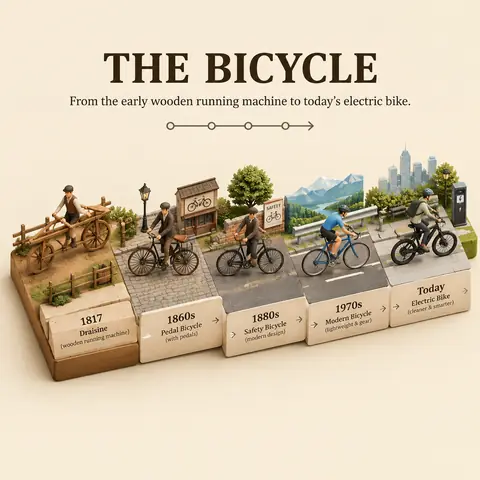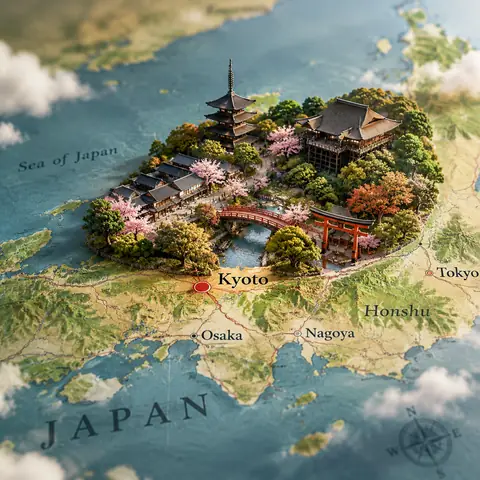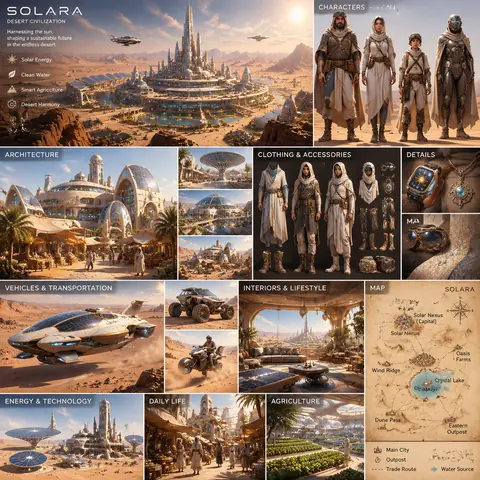
Isometric 3D Educational Diorama That Explains a Process
Details
| Category | 3D Characters & Figurines |
|---|---|
| Aspect ratio | 1:1 |
| Input | Text only |
| Example generated with | GPT Image 2.5 |
| Recommended models | Nano Banana Pro, GPT Image 2.5, Nano Banana 2, GPT Image 2 |
| Original author | @aleenaamiir · Original post on X |
| Original model | nanobanana |
Why this prompt works
A smart template for teachers and explainer content. It asks for a stepped or layered base where each level shows one stage, connected by subtle arrows, with tiny faceless figures for scale, which keeps attention on the process rather than characters. Title, subtitle and icon sit at the top over a single background colour, and text contrast is set automatically. For 'how rain forms' on pale sky blue, our result has a cutaway terrain block with ocean, river, mountains and a rain cloud, four numbered stages (evaporation, condensation, precipitation, collection) and accurate captions. It works for photosynthesis, recycling, coffee production or how a bill becomes law.
How to adapt it
| Variable | What it changes | Examples |
|---|---|---|
| [PROCESS / CONCEPT] | what the diorama explains | how rain forms (the water cycle), how coffee gets from farm to cup, photosynthesis |
| [PROCESS NAME] | the large title text | HOW RAIN FORMS, FROM BEAN TO CUP |
| [BACKGROUND COLOR] | solid backdrop | pale sky blue, soft sage, warm sand |
Tips
- Processes with 3–5 clear stages work best; more stages crowd the base.
- Check the captions; even simple science can come out slightly off.
- Keep 'no facial details' on the figures to avoid uncanny tiny faces.